 Taxonomic classification
Kingdom: Animalia.
Phylum: Chordata.
Subphylum: Vertebrata.
Class: Mammalia.
Subclass: Theria.
Underclass: Eutheria.
Order: Carnivora.
Suborder: Caniformia.
Family: Ursidae
Genus: Tremarctos.
Species: Tremarctos Ornatus.


Reproduction:


Habitat and manners:


Their Enemies





Bibliography:
Google images:
http://hunthighpoint.com/
"Oso de anteojos - biopatrimonio de Colombia." Bienvenidos al portal de RED PAA. Web. 23 May 2013. <http://www.redpaa.org/index.php?option=com_content&view=article&id=113:oso-de-anteojos>.
"OSO DE ANTEOJOS (Tremarctos ornatus)." Perú Ecológico. Web. 23 May 2013. <http://www.peruecologico.com.pe/fau_osoanteojos_1.htm>
https://mail-attachment.googleusercontent.com/attachment/u/0/?ui=2&ik=88c58e4398&view=att&th=13f34cf42541b3fc&attid=0.1&disp=inline&realattid=f_hgpfwwuk0&safe=1&zw&saduie=AG9B_P_KrkaDkq95o1B2IdVbe9u6&sadet=1370980706886&sads=exksRTfFB0SLUKq7QU7Iz1QRd3o
Characteristics of the bear
Ancestor: Arctodus Simus.
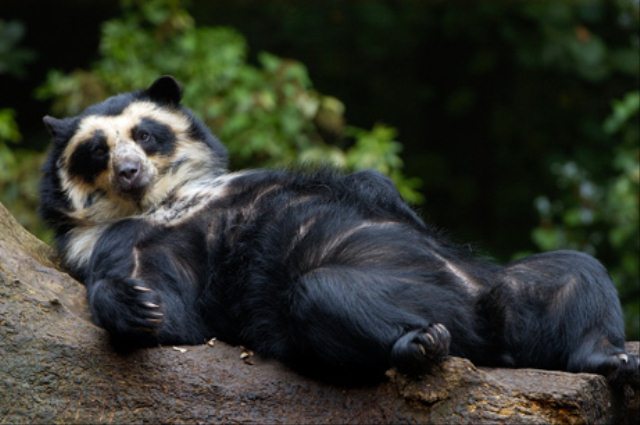
It is also called: Andean bear,
Spectacled bear or Short-faced bear.
It is considered to be the unique
vegetarian bear.
It is the unique Ursid in South
America.
It has 13 pairs of ribs, different
from the other bears that have 14.
It has plantigrade that supports
the sole of their feet.
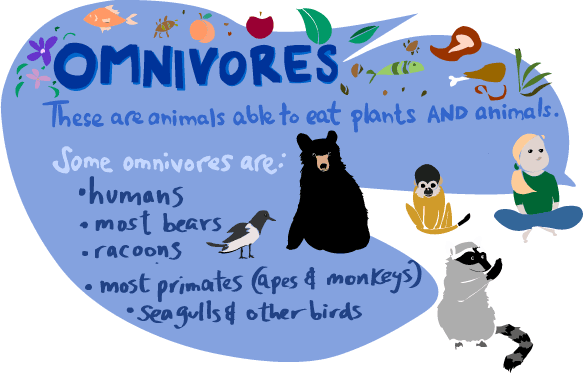
It is omnivore.
It is one of the highest height mammals.
Has long curved claws.
It’s the only short faced remaining
bear.
It gets its name because of the pale
yellow face markings.
It is Nocturnal.
Reproduction:
Tremarctos Ornatus gets to the 36
months of life, it arrives to its sexual maturity. Its reproduction begins when the female is in its
menstrual cycle; the couple start to prepare for mating, until the female is
ready for it. The gestation of the bear takes between 4 and 6 months and it get
1 or 2 offspring.

Habitat and manners:
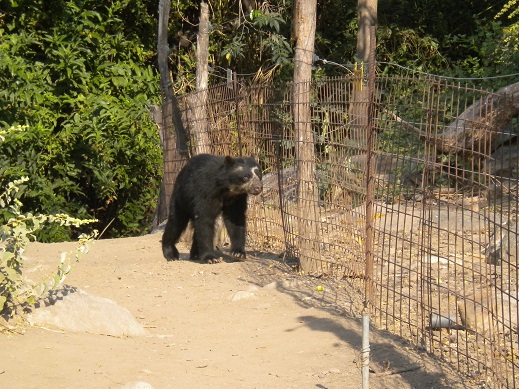
Spectacled bears live on the
Amazon Andean region. They are active during night. During the day, they refuge
in caves, under tree roots or on trunks. They are arboreal and good climbers.
On trees, they build platforms in which they get more food. They
are solitary bears and silent bears; they only communicate when they meet
another bear.
Importance of the Bear in the Habitat:
The Trecmactos Ornatus is really important for their
habitat, because they feed mostly of different products of plants, such as
flowers and fruits letting all around the seeds oas a
consequence this bear convert in a huge disperser of seeds (that then will grow
and form plants) around all the territory. The Trecmactos Ornatus is an
important fact for the plants for its reproduction.
This bear sustain
a lot of species (mostly plants) among the entire place in which they live.
Their Enemies
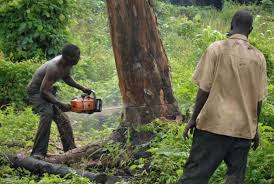
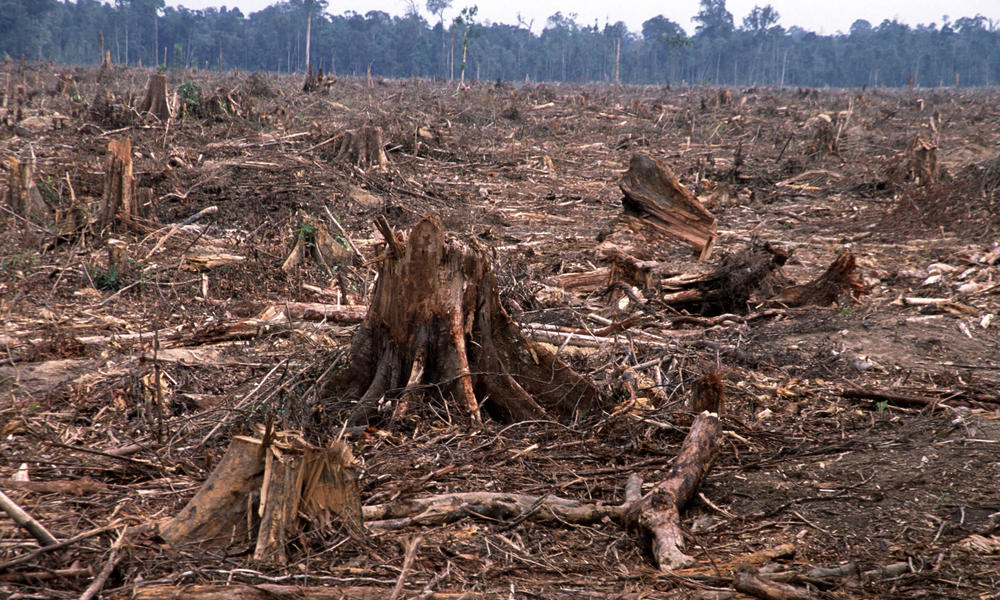
Their natural enemies are the
jaguar and the puma. But their more shocking enemies are humans, because
of forest destruction, deforestation, and hunting. Habitat lost is the biggest problem for this
bears, they are also victims of hunting and there is use of illicit
trafficking, by using them as circus animals in which they are maltreated.
Strategies, Role and Ideas for the Protection of the Bear
Strategies of the government developed to protect the Species:

The government did certain laws for protect the Trecmactos Ornatus and all the territory in which it live, this is one of the most important strategies that the government had took for protecting this endangered species. In these laws there are included restrictions such as: killing animals of this specie, making any kind of mutilation which is not for protecting this species . Other strategy is that with the help of other entities that protect the environment, reforest the habitat of the bear. They are trying to make this in the shortest time possible.

Role of people developed
to protect the species:
Our Ideas to protect the species:
We can make campaigns for making not only the people that are close
to this animal, but all the people in the world, to know the importance of this
animal and by this way reduce in a huge way the hunting of the bear and the
deforestation of its habitat. Another idea is to collect money that can be
invert for helping them. Other idea is to make centers for capturing the bears that are sick or suffering any kind of problem, so
that then they can put them again in their natural habitat when they are in
perfect conditions, in this way the quantity of bears dying is less.
Question:
Do you think this important Species could be saved? Yes/No. Explain.
Most of the people think that the species could be saved, but it would be really difficult to do so, because it requires a lot of effort. People suggest to take care of the species and to finish with the deforestation and hunting, also to follow the laws established in order to protect the species.
Most of the people think that the species could be saved, but it would be really difficult to do so, because it requires a lot of effort. People suggest to take care of the species and to finish with the deforestation and hunting, also to follow the laws established in order to protect the species.
Bibliography:
Google images:
http://hunthighpoint.com/
http://www.zooborns.com/.a/6a010535647bf3970b017d4304a916970c-500wi
http://i.huffpost.com/gen/961605/thumbs/a-BILLIE-JEAN-ANDEAN-BEAR-640x468.jpg?15
http://media.nbcwashington.com/images/654*368/7889493_AndeanBearCubs_722x406_29172291804.jpg
http://blog.mailasail.com/beezneez/812/image/jpgzPANHOqqM0.jpg
http://cdn2.arkive.org/media/BF/BF77CAF1-67D0-42CC-8E63-F5626F2568F8/Presentation.Large/Close-up-of-spectacled-bear-paw.jpg
http://i.huffpost.com/gen/961605/thumbs/a-BILLIE-JEAN-ANDEAN-BEAR-640x468.jpg?15
http://media.nbcwashington.com/images/654*368/7889493_AndeanBearCubs_722x406_29172291804.jpg
http://blog.mailasail.com/beezneez/812/image/jpgzPANHOqqM0.jpg
http://cdn2.arkive.org/media/BF/BF77CAF1-67D0-42CC-8E63-F5626F2568F8/Presentation.Large/Close-up-of-spectacled-bear-paw.jpg
Information:
"Oso de anteojos - biopatrimonio de Colombia." Bienvenidos al portal de RED PAA. Web. 23 May 2013. <http://www.redpaa.org/index.php?option=com_content&view=article&id=113:oso-de-anteojos>.
"OSO DE ANTEOJOS (Tremarctos ornatus)." Perú Ecológico. Web. 23 May 2013. <http://www.peruecologico.com.pe/fau_osoanteojos_1.htm>
https://mail-attachment.googleusercontent.com/attachment/u/0/?ui=2&ik=88c58e4398&view=att&th=13f34cf42541b3fc&attid=0.1&disp=inline&realattid=f_hgpfwwuk0&safe=1&zw&saduie=AG9B_P_KrkaDkq95o1B2IdVbe9u6&sadet=1370980706886&sads=exksRTfFB0SLUKq7QU7Iz1QRd3o

